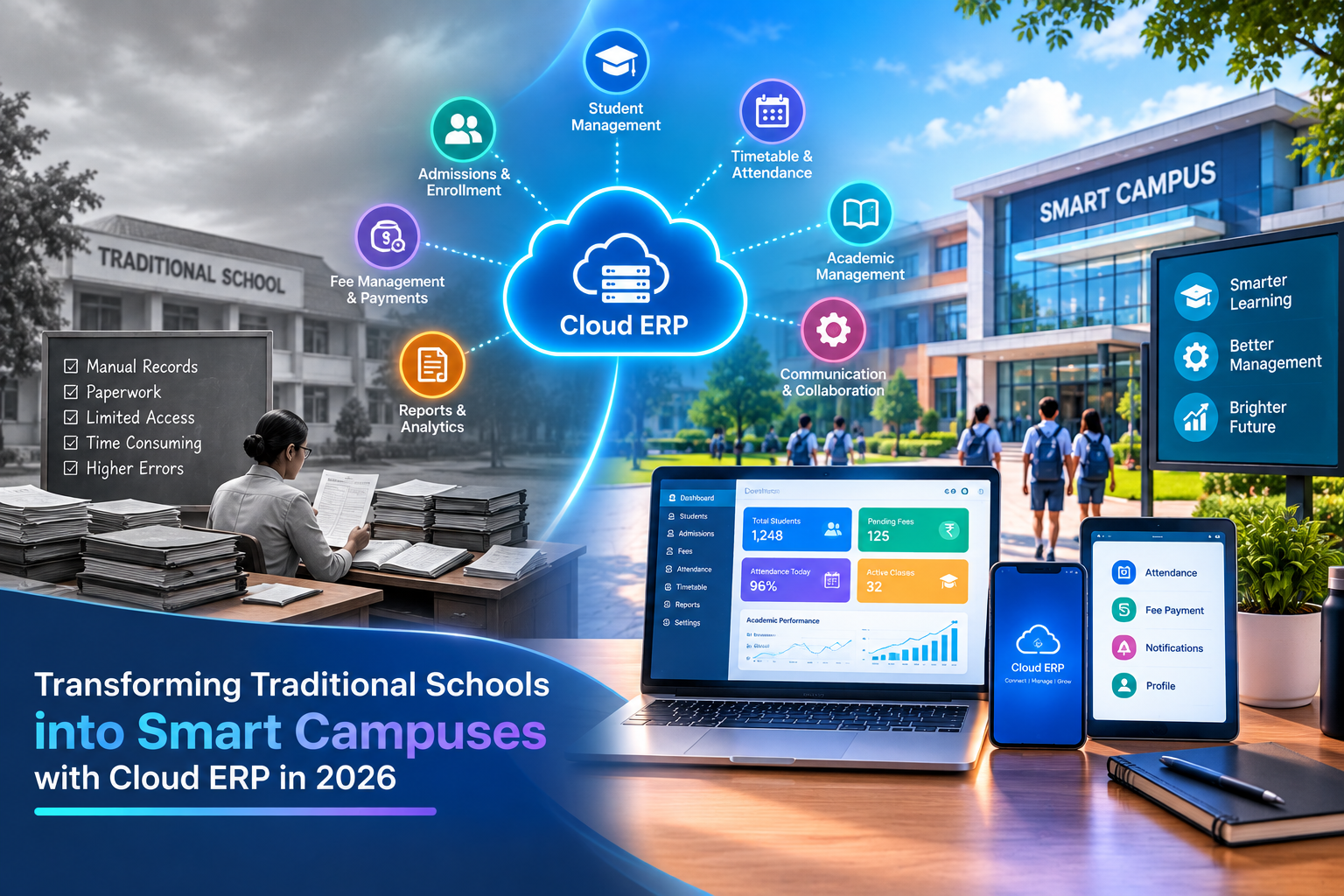
For decades, managing student fee collections in schools, colleges, and educational institutes has been a cumbersome manual process. Administrative staff spent countless hours issuing paper challans, recording transactions in physical ledgers, and standing in long queues during admission seasons. Today, with the rapid advancement of School ERP software and digital payment gateways, educational institutions are transforming how they handle financial workflows.
What is Digital Fee Collection?
Digital fee collection refers to the automated process of collecting, tracking, and reconciling student tuition and miscellaneous fees via integrated online payment gateways, UPI, credit/debit cards, net banking, and automated e-receipt generation within a centralized school management system.
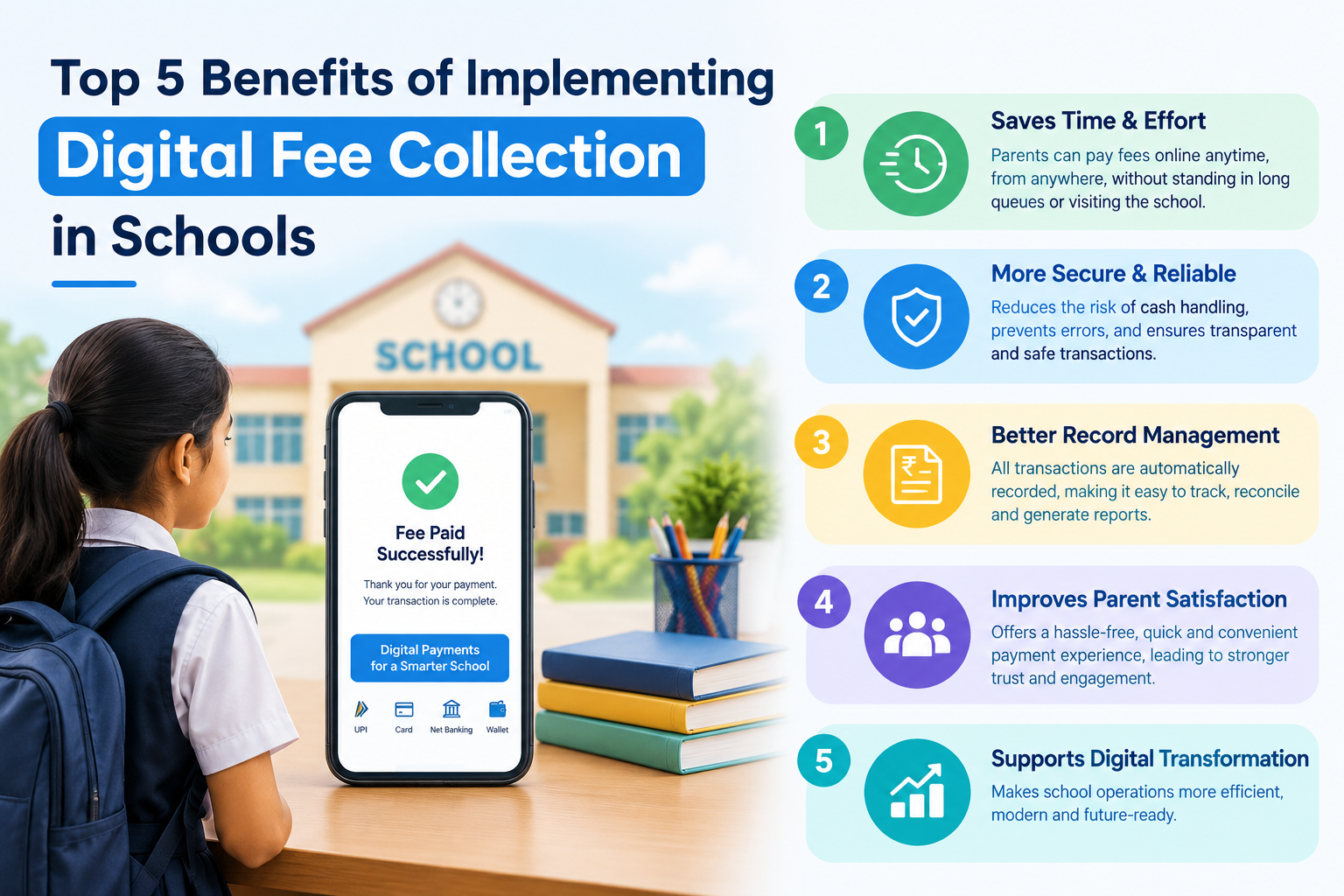
Top 5 Benefits of Moving to Digital Fee Collection
1. Seamless Convenience for Parents
Parents no longer need to take time off work or stand in long school queues to pay fees. With a secure parent portal or mobile application, fees can be paid 24/7 from anywhere in the world using their preferred payment method, whether it is UPI, credit card, or net banking.
2. Elimination of Human Errors & Fraud
Manual receipt handling and cash transactions are prone to calculation errors, misplaced records, and reconciliation mismatches. Automated school ERP systems instantly update student ledgers the moment a transaction clears, ensuring 100% financial transparency and eliminating revenue leakage.
3. Instant Electronic Receipts & Automated Reminders
When fees are paid online, the system instantly generates a digitally stamped fee receipt and emails or SMSs it to the parents. Furthermore, automated SMS and push notification reminders can be sent to parents regarding upcoming due dates, significantly reducing delayed payments.
4. Streamlined Accounting & Real-Time Financial Reports
School accountants no longer have to manually match bank statements with cash books. Comprehensive dashboard reports give management real-time visibility into total collected revenue, pending dues, concession tracking, and category-wise fee breakdowns with a single click.
5. Eco-Friendly and Paperless Operations
Transitioning from printed fee books and physical carbon-copy receipts to digital ledgers drastically cuts down paper consumption, aligning educational institutions with modern sustainability and green campus initiatives.
Conclusion
Implementing digital fee collection is no longer just a luxury feature—it is a vital operational upgrade for modern educational institutes. By integrating automated payment modules into your school ERP platform, you save administrative hours, eliminate financial discrepancies, and deliver a vastly superior experience to parents and staff alike.